Saturday, March 21, 2015

Places of Your Heart


Corey Primus was married to my beloved sister for many years and is the father of their four amazing children. Although they have been divorced for a long time now, he is much respected and loved by our family.
Corey is an award winning song writer, musician and performer.  As long as I have known him, which is thirty-five years now, he has belonged, like a child lost in wonder leaping in leaves, to music. His songs, which possess a unique clarity all his own, shine with benediction and transformation. Just as a dancer prays by dancing and a painter prays by painting, I think Corey prays through his music, his songs, and his voice.

Please listen to his original creations  including the beautiful 'Places of Your Heart', and also to the wonderful music on his sound cloud:

Tuesday, March 17, 2015

Green, Greener, Greenest


Are you wearing green today?

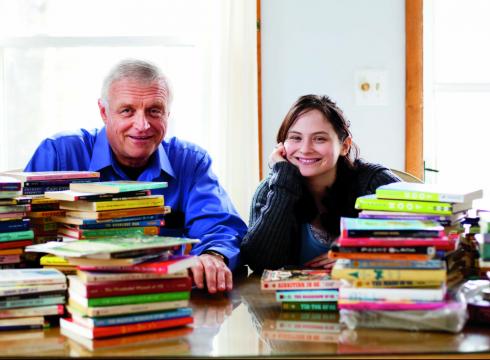
I wore a green shirt to work today. Gem wore a tie emblazoned with shamrocks. Neither of us has any ancestral connections with Ireland, of which we’re aware, anyway. However, when it comes to St. Patrick’s Day, we’re delighted to celebrate with the Irish.  Many of the children taking part in the Spring break activities at my book store were also clad in a bit o’ green.
Perhaps the greenest of green children’s books are the “Frog and Toad” series, written and illustrated by Arnold Lobel. Frog And Toad Are Friends (1970), Frog And Toad Together (1972), Frog And Toad All Year (1976).  These ‘I Can Read’ early readers are winners of both the Newbery for distinguished writing and the Caldecott for excellence in illustration. They are classic works of children’s literature. Filled with wisdom and laughter, friendship and silliness, these stories possess a gentle magic. Frog and Toad fly kites, take long walks, ride bicycles, read to each other, swim and cook, and clean Toad’s very messy house. They dream and imagine, are brave and hopeful, and goad and tease each other with an old-fashioned courtesy that is nonetheless still amusing today.
 

And, they’re green. Well, of course, you may be thinking. After all, frogs and toads, by their very nature, are green. But the illustrations in these books take that greenness to another level; everything in them is tinted, shaded, coloured and imbued with every hue of green imaginable. This includes the walls of their houses, their furniture, their clothes; the food they eat, the very air they breathe on the pages. Green, greener, greenest. How this is achieved is a remarkable feat of artistry.

Apparently, these characters were inspired by boyhood summer holidays when Arnold Lobel spent much of his time observing frogs and toads in a nearby pond. He found the creatures beautiful, interesting and comical, and years later they would form the basis for his lovely tales.

“You can keep your willpower, Frog. I am going home to bake a cake.”
―  Arnold Lobel, Frog and Toad Together 
Actually, cake sounds rather good right now. I think I shall do likewise, and ice it with a little greenish butter-cream, by way of adding  some Froggish- Toadish (and Irish) charm.


Saturday, February 14, 2015

Valentine Roses


I would like to share a moment of Valentine heart with you.

My husband comes from a Dutch immigrant family. His mother, whom our children called Oma, was a tall, robust woman with a big heart. Loud voiced and opinionated, her actions sometimes surprised me with a gentleness that belied her more usual stance.

Once, many years ago, she took me with her to visit an elderly Dutch lady from her church. This venerable woman, in her mid-nineties, was wonderfully spry. In addition to keeping a small vegetable garden and attending her flower beds, her little house was meticulously clean. That day, as I got out of the car, I saw a tiny, white-haired creature busy painting her fence.

My mother-in-law admonished her a little, "Minnie, you shouldn’t be doing that. Can’t your son-in-law do it for you?"

The little, stooped figure straightened up, made a dismissive gesture, and said something in Dutch, which was translated to me as, "He who has butter on his head, should stay out of the sun."

I must have looked baffled, because she attempted an explanation, "Da son-in-law be only 70, but he be tired all da time. Och!"

As she motioned us into the house, we passed the rose bushes which had been the especial love of her husband, Henk, who had passed away several years ago. Minnie took a pair of scissors from her apron pocket and snipped two blooms.

Perched on an aged wing chair in the living room, I watched as she placed the richly red roses in a vase next to a picture of a smiling old man holding a small dog. For a moment, her hand trembled against the velvet labyrinth.

"Yah. Old fool love da roses.", she said.

My eyes met those of my mother-in-law, who was unloading the almond cookies she had brought with her, and putting the kettle on in the adjoining kitchen. She was smiling, and her eyes were full of an unaccustomed softness.

Later, as we drove home, she told me that Minnie had once told her that several months before he died, Henk, fearing a heavy rain storm would destroy his last roses of the season, had gone outside to cut them. "Minnie told me she followed him out into the rain and held an umbrella over his head while he did this."

I was nineteen and passionately, newly married. I couldn't imagine anyone old being romantic. That is, until that moment, listening to my mother-in-law's words.

That benediction of late roses lives in me, still.


May each of you seek always  to discover the joy and beauty of your own Valentine moments.

Wednesday, January 28, 2015

Xander's Panda Party


Xander’s Panda Party, by Newbery Award winning, Linda Sue Park, and illustrated by Matt Phelan is a little gem of a book. Written in wonderfully mesmerising rhyme, it is a delight to read aloud.
 
Xander’s original idea is to plan his birthday party for pandas only, but he quickly realizes that would make it a party of one. So ....
 
 
Xander adds all the bears to the list … but … Koala protests. She’s a marsupial! Does that mean she isn’t invited? This leads to his expanding the guest list to include all of the mammals in the zoo.
 
But then:
 
"Soon Rhinoceros sent word:
'It may sound a bit absurd,
but I won't come without my bird.'"

'Xander felt a little blue. He chewed bamboo, a stalk or two. He fidgeted
and paced the floor, then scratched an itch and paced some more.
Finally, a firm decision: Xander's brand-new party vision.'
 
(The double page wordless spread of Xander delivering invitations to all the animals in the zoo is wonderful. )
The essential mathematical and scientific concepts of identifying, sorting, grouping and classifying are introduced in a very clever, engaging way.  It is also a story about inclusiveness and diversity shown in a format which is gentle, amusing and appealing.
 
"What a party! What a ball! Lots of new friends, tall and small! Every creature at the zoo…"
As folk singer Bill Staines sang, "All God's critters got a place in the choir!".
As ‘”Xander's party plans went from grand to even grander”, this story has got me thinking about the trend in children’s birthday parties in general.  When my children were growing up, these were simple affairs by today’s standards; cake, balloons, presents, games like pin the tail on the donkey. We generally adhered to the one guest per child’s age idea. My sons both celebrate their birthdays in mid-August so their parties were always held outside in our back yard; apple bobbing, the slip n’ slide, three legged races, sack (pillow case) races and the like.  A couple times we had a piñata; kids adore candy raining down from above.
 
My daughter is a January baby so her parties were held indoors, but consisted of some similar activities, games and also crafts like creating friendship bracelets. The party she remembers best is her seventh, which featured dressing-up. For this, I merely placed a huge box filled with an assortment of old clothes; primarily ladies’ dresses, shoes and hats for the girls to dress up in, in the center of our rec-room, alongside a basket filled with costume jewellery. I also set up a large standing mirror so they could see themselves, and preen and prance before it. It was a huge hit, and Sarah-Beth remembers it with delight.
 
In those days my children felt that McDonald’s parties were the ultimate in sophistication and were thrilled to receive an invitation to one. Our family didn’t visit McDonald’s often, so for them, this was a real treat and a novel idea. Gradually, children’s birthday parties seem to have become elaborately themed galas with custom cakes, expensive gift bags and party favours, solar powered bouncy castles, petting zoos, and over-the-top activities.  Parents feel a lot of pressure and competition to provide the ‘perfect’ experience.
 
Last year we were invited to a first birthday party for the one year old granddaughter of a friend. It was princess themed and there were at least sixty people in attendance. At one point, the sweet little thing was dressed in a multi-layered, frilly tutu and tiara and placed on a plastic sheet by herself with a large whipped cream cake especially made for her to attack and ruin while a professional photographer took pictures. The amount of gifts was unbelievable, and the food fabulous enough for an Oscars Party! By the end of the event, the little princess was in tears and her parents looked frazzled.

The cake below is a far cry from one of my own typical kids' birthday cake efforts which usually consisted of a home-made slab cake of some sort, slathered in icing and decorated with smarties.
                                                   (from Google images.)
I pray the day will prevail that this trend will reverse and simpler birthday parties become in vogue once more.  
In Xander’s words:
“A celebration invitation – food, fun and conversation!”


Monday, January 26, 2015

The Wind in the Willows


The Wind in the Willows, by Kenneth Grahame. Published in 1908, this book is a great literary treasure.  I first became entranced by its gorgeous prose and imagery when I was eleven years old, and my teacher, Mr. Ballard, read it aloud to our class. Nominally a children’s book, it actually continues to grow in depth and beauty as we age. Indeed, it is one of those rare books that grows with the child into adulthood.

This is a book which speaks to that place within us which can be defined as holy. Its sense of the mystical, the unnamed, the unknown, that in us which responds to beauty and deep, unfettered joy, permeates the whole of the book. Gradually we come to know that when awe, reverence and beauty defines our lives, we possess the transcendent ability to overcome limiting margins. There is also a delicious humour throughout which delights all the senses.    
 
 
The Wind in the Willows is a tale of seeking the meaning of happiness, of friendship, of honour and of peace. Mole, bored with spring-cleaning and infected with humdrum, decides to go on a holiday. He encounters the River:

"Never in his life had he seen a river before -- this sleek, sinuous, full-bodied animal, chasing and chuckling, gripping things with a gurgle and leaving them with a laugh .....  All was a-shake and a-shiver -- glints and gleams and sparkles, rustle and swirl, chatter and bubble. The Mole was bewitched, entranced, fascinated. By the side of the river he trotted as one trots, when very small, by the side of a man who holds one spell-bound by exciting stories sent from the heart of the earth to be told at last to the insatiable sea.”  


Mole then meets Rat, who invites him to go boating on the river and share a picnic.

“There he got out the luncheon-basket and packed a simple meal, in which, remembering the stranger's origin and preferences, he took care to include a yard of long French bread, a sausage out of which the garlic sang, some cheese which lay down and cried, and a long-necked straw-covered flask wherein lay bottled sunshine shed and garnered on far Southern slopes.”


Along the way they encounter Badger, Toad and Otter. Each character is gradually honed and distilled and refined through their conversation, actions and the way they experience every aspect of the day’s adventures. Toad’s manic search for happiness is a foil for the others who each define and seek it differently. What constitutes sanity, happiness, peace? There are so many layers of redemption, forgiveness, fulfillment and transcendence in this tale.

“All this he saw, for one moment breathless and intense, vivid on the morning sky; and still, as he looked, he lived; and still, as he lived, he wondered.”

Kenneth Grahame is the grand master of alliteration and word play. His coupling of words is brilliant; “chatter and bubble”, rustle and swirl” as they meander along the river "chasing, chuckling," "gurgling, glints and gleams." The words are truly bewitching. We are entranced by them.  Our senses "a-shake, a-shiver” as we become alive to his gorgeous passages of prose.
"This day was only the first of many similar ones for the emancipated Mole, each of them longer and fuller of interest as the ripening summer moved onward. He learnt to swim and to row, and entered into the joy of running water; and with his ear to the reed-stems he caught, at intervals, something of what the wind went whispering so constantly among them."

All you who love the art of the word, whether it be written, spoken, composed, sang, painted, sculpted, photographed, prayed, eaten, danced … please read the wonder that is ‘ The Wind in the Willows.’


Monday, November 10, 2014

New Light


Introducing our newest family member, my beautiful new baby granddaughter, born November 8th, 2014, weighing 6 lbs,14 ozs.

At this darkening time of the year, we celebrate her birth as a bringer of light, and much joy. I feel awash with a passion of tenderness.

It's a subtle change like the scent of new snow, but I know the world has changed since the birth of this new little girl. I wonder what textures baby E will make of the mosaic around her. Right now she is the heart of life, around whose centre everything else is peripheral. The source of that love is divine, and gathers each of us into its blessedness.

Tuesday, October 21, 2014

By the Light of the Moon


(Walking in Moonlight, by Nicole Wong)
 
I read somewhere that “To say to anyone, ‘I love you’, is tantamount to saying, ‘You shall live forever’. Immortality; I think there is a passionate human desire right now, especially among children and young people, to feel a connection and sense of belonging to the mystical.

A very real little boy went for a walk with his very real Nana one silvery spring evening. A huge, full round moon filled the night sky with light as his warm little hand pressed hers.


“When I am a hundred years old, I will catch up with the moon?” the little boy said.


“What will you say to her?” said his Nana.
“Moon, do you ever get tired of shining?” replied the boy.

“What do you think she will answer?” asked his Nana.

“No, because I will shine forever and ever.”

“And then”, said the little boy, his arm gesturing upward, “the moon will give me a tiny piece of her light, and I will keep it always.


Sunday, September 14, 2014

Voice and Heart

 
When I was a little girl, I was painfully shy. It seemed I couldn’t work my voice and heart together. My tongue often felt stranded, hidden behind a fearful, ardent inability to verbally express myself fully. Thoughts and ideas seethed within me, often fueled by the books and poetry I read avidly for hours every day. I felt as a ship exists in fog, my real self there, but hidden.

I slowly began to realize that what you think and what you say is often not the same thing. Once when I was three years old, and seeing the ocean for the first time, I stood by the edge of the water and said to my mother, “What a lot of wetness!” She laughed, and I said, “Why are words too small sometimes?” I don’t remember this, but the sentiment behind it has often defined me.

When I have words to name the inscrutable; when the unknown appears known in words, these are the times when I feel my most seraphic, authentic self.

Thursday, July 17, 2014

Zaanse Schans

The Letter Z.


My husband, Gem, immigrated to Canada from the Netherlands with his family when he was nine years old. A couple years ago we had a wonderful three week holiday there. We brought our granddaughter, A, who was nine years old at the time, with us. One day we took a day tour to the countryside to an area known as Zaanse Schans which is a fully inhabited, open-air conservation area located just a few miles north of Amsterdam. Zaanse Schans was named in 1574 when a Dutch Governor by the name Diederik Sonoy built it to prevent the Spanish troops from invasion. ‘Schans’ actually means Fortress. It is located in Zaandam, near Zaandijk in the municipality of Zaanstad in the province of North Holland.


At Zaanse Schans you get a vivid impression of the Dutch way of life in the 17th and 18th centuries. There are authentic houses, a historic shipyard, a cheese and dairy farm, an old fashioned grocery store, and above all, many windmills.

                          My granddaughter and I by one of the many windmills.

It is a place often referred to as an open-air museum because of its extraordinarily well preserved architecture and traditions.


We wandered around drinking in the beauty and peace of Zaanse Schans for several hours.


A litle girl hidden by grasses almost as tall as she is. A loved the freedom. The melody of the wind making constant rush-rushing sounds as it blew through the waving grass was lovely.

The grasses don't hide Papa quite so well.


It was very interesting to see the group of people dressed-up in traditional Dutch clothing. Gem remarked that they were dressed just as his own grandparents and great-grandparents would have been. He explained this to A and she thought they looked cool, and expressed her desire to own a pair of wooden shoes.


The black and white Friesland cows were charming. They must lead an idyllic life for a cow, free to roam the countryside with an abundance of fresh, green grass. No wonder they produce such delicious cheese and creamy milk.

A was very excited to see a swan for the first time. We watched his graceful swimming and preening for a long time.

We will always remember the sound of the rushing grasses and the abiding peace of Zaanse Schans.

Monday, July 7, 2014

Strange Fruit


STRANGE FRUIT
 
To you dark blackberry succulent dreamer,
I bring you my strawberries of romance,

My blueberry stained fingers,

My bitter lemons of transcendence,

My red cheeked apples of exultation,
 
My purple laden vines of the night,
 
My crushed raspberry hopes

My pungent lime ecstasies.
 
My consummate deliciousness

And juicy tender lips.
 
Strangely desirous to know
 
The earth is a good earth.


Saturday, July 5, 2014

A Matched Set


The above photograph taken in May, 1958 outside our Wandsworth, London house, is of my mother, me, and my new baby sister, Connie. I was sixteen months old and wearing a new red and white organza dress sent to me by my Canadian grandmother. Note the tiny white gloves. Apparently by that age I was already quite capable of putting them on myself, although it took me a long time to accomplish the task. As we only lived in London for the first two years of my life, I have no memory of that house or its environment. My mother tells stories of how I loved to feed the ducks at Wandsworth Common, and would try and make sure each received its fair share, admonishing certain bolder ones "not to be greedy." The dress in that picture was to be the last I had individually for a very long time.


The second picture was taken about a year later, of Connie and I at the ages of two and half and one. The dresses were red with white lace trim and we wore red leather shoes to match. This was the beginning of a trend that would see us dressed identically all through childhood until we were about eleven and ten, when a rebellion of sorts took place.

I am the oldest of six girls and my mother generally dressed us in matched sets; Connie and I, and then the next three sisters (Amanda, Suzanne and Alice) born five, six and eight years after me. My youngest sister, Hannah, arrived much later, when the rest of us ranged between fifteen and seven, and thus she was spared the years of identikit clothing. On special celebrations, such as Christmas and Easter, we girls were often dressed five-of-a-kind. I especially loathed these occasions. Reminiscing once with my sister Alice about this, she told me, "You think you had it bad! What about me? I had all the other dresses to grow into! I wore that green velvet Christmas dress for about ten years!" I hadn’t considered it from that point of view before, and she certainly deserves sympathy.

The matched sets of clothing didn’t stop at just the dresses. It applied to coats, shoes, cardigans, and even nightgowns. We were allowed more freedom with our play clothes, but for every other activity, we left the house starched and ironed and clad alike.

The sixties were in full swing and I yearned for the psychedelic patterns and bright colours that my friends wore.


Perhaps what I yearned for the most, though, was a pair of shiny, white Gogo boots. I envied my friend Linda, proud possessor of a pair. However, my mother thought Gogo boots were ’unseemly’ or ’crude’. In fact, she once referred to them as “prostitute boots’, a term my sister Connie and I didn’t understand, even after we had looked it up in the dictionary.


My mother was decidedly old-fashioned. We girls wore smocked dresses with sashes, or pleated skirts with frilly blouses. Our footwear was leather or patent-leather buckle shoes. I didn’t own a single pair of trousers until I was thirteen. For my twelfth birthday I asked for something I had never had before … an outfit of my own choosing, modern, and exclusive to myself. My mother granted that wish. She took me to London for a shopping trip, and I have never forgotten the joy of that special day. I can close my eyes and still see the dress I chose … navy, yellow and white swirled in a psychedelic pattern with trumpet sleeves and a belt around the middle. It came with a little triangular matching head-scarf of the same fabric.

I wish I had a photo of me wearing that dress. It was styled something like this, but not as short and with a higher neckline.
Alas, I was never able to convince my mother about those Gogo boots!

Oh, the thrill I felt when wearing that dress; the first awakening consciousness of the power of my femininity. Many years later when watching my own daughter make her first foray into a style of clothing not chosen by me, I became fully aware of the bittersweet act of letting a child go. I knew then what my mother felt that day as I preened before her in the kitchen. It is a peculiar ache, the mingled emotions of love and regret. Yet, together they create a whole and balanced beauty. A matched set, as it were.

(This is a Sepia Saturday post.)

Sunday, June 15, 2014

A Father's Promise


As Father’s Day approaces, I want to write about an extraordinary father who made a promise to his daughter. The Reading Promise: My Father and The Books We Shared, by Alice Ozma, is a magical, and beautifully written, biographical tribute by Alice to her father.

When she was nine years old, Alice’s father, a school librarian, promised her that he would read aloud to her for the next one hundred nights. When that goal was reached, they celebrated with a pancake breakfast, and Alice proposed that they extend the project for another one thousand nights. Thus began an odyssey that continued for a further 3218 nights, finishing on the day Alice started university, at the age of eighteen!

 "We called it a Reading Streak, but it was really more of a promise. A promise to each other, a promise to ourselves. A promise to always be there, and to never give up. It was a promise of hope in hopeless times. It was a promise of comfort when things got uncomfortable. And we kept our promise, to each other."
 
It certainly wasn’t always easy, and Alice doesn’t shy away from discussing the difficulties. What they termed, the "Reading Streak", was kept up during some extremely tough times; during the heart-wrenching weeks after Alice’s parents separate and her mother moves out, during the sad days following her grandfather’s death. There are nights when her father reads over the phone when she is away at sleepovers or school trips, and one memorable occasion in the school parking lot as Alice leans sullenly against the car door. There is also a very touching description of a father reading to a daughter, all decked out in her Prom gown finery.

The main thread of the book is the nightly ritual between father and daughter, and the books that they share. They keep a meticulous list of these which appears on the ”List of Books from the Reading Streak” at the back of the book. As various books and characters are discussed, analyzed, some mentioned in depth, others in mere passing, they are woven throughout the real life fabric of Alice and her father’s lives. Gradually, Alice’s father’s deeply eccentric, quirky, lovable nature is revealed. She paints a picture with amazing precociousness and sensitivity, of not just the words they shared but also the spaces in between.

During times of anger and awkwardness, embarrassment and teenage angst, still he reads and she listens: sweetly sleepy, sad, joyous, anxious, silly, pensive, thoughtful moods in turn. Father and daughter giggle and whisper, laugh and cry together. Sometimes after a day spent in angry silence, the only spoken words between them are the sound of his voice reading to her… We read like we always did. My father and I, together, sharing words that weren’t our own but were still a part of our secret language.”

Alice's father's boundless belief in her created a young woman with rare self-possession and confidence. This is a mature book about a father/daughter relationship. It is about faith and trust, passion and compassion, about a deep, abiding love and belief in each other. And in Alice's own words, 'But more than that, it was a promise to the world; a promise to remember the power of the printed word, to take time to cherish it, to protect it all costs. He promised to explain to anyone and everyone he meets, the life-changing ability literature can have.'
 
                                                           (Alice Ozma and her father, Jerry.)
Happy Father’s Day to all you magnificent fathers out there, and especially those who read to your children and grandchildren, including my own darling husband, our two wonderful sons, and our terrific son-in-law!  

Thursday, June 12, 2014

Purple Lines

The Mag               (The Promenade, 1918, by Marc Chagall )
 
                               
                                                          PURPLE LINES

There are days when
all I want to be
is the sky surrounded by the sea.
There are days when
all I want to be
is a dancing wind above a tree.
There are days when
all I want to be
is a lavender song floating free.
There are days when
all I want to be
is a purple line of poetry.
 

Thursday, May 8, 2014

Smoke Screen


                            Stanley Kubrick, for Look Magazine, 1949.
   
Smoke Screen
 
Fortune flashed in his hair,
in the dark of his eyes.
Summer skimmed the surface
of her thoughts.
She wondered what it would be like
to dance in his wind.
The stars drew his name
in clusters of burning points.
She wished on them.
She battled the air for knowledge.
She burned incense.
She dreamed of orange blossom
and spices on the altar of his being,
And she played the part of everyone
but herself.
 

Wednesday, April 30, 2014

Xanthe

                                                              
    An ABC Wednesday Post: The Letter X

(Xanthe, daughter of Oceanus, by Barbara Cooney.)

Last year I received a birth announcement from a friend's daughter announcing the arrival of her new baby girl; Xanthe Alexandria. The correct pronunciation of this is Zanthee, which I only discovered after a conversation with my friend.

In Greek mythology, Xanthe was a sea nymph, one of the Oceanids, the daughter of Oceanus and Tethys. In ancient Greek, Xanthe means 'golden one', which has also been interpreted as blonde-haired. More likely than not, little Xanthe will be the only child in her class with a name beginning with X. So too, by the time she starts school, she will probably be used to telling people how her name is pronounced.

The Romans had an expression nomen est omen, or "name is destiny." A name is part of a person's legacy. It will be recorded in history. You will say it thousands of times during the course of your life.  It will be written on class lists, read out loud amongst throngs of others at graduation, spoken with portent on your wedding day, printed on business cards. Above all, rightly or wrongly, a name often conveys an image, an assumption about the person. It creates an impression.

Psychology professor, Albert Mehrabian, tested a host of names to see how people viewed them. Some names immediately aroused images of beauty or intelligence, others of popularity or kindness. Yet others were seen as artistic, nerdy or odd. On the whole, people judged to have more traditional names such as Rachel and Robert did extremely well. More alternative names scored badly. Breeze, for example, was viewed as being a poor student and business risk. Mehrabian feels that parents who choose or create bizarre names for their children are ignorant, arrogant or just plain foolish.

                                                    (from Google Images.)

Some celebrity offspring names are perfect illustrations of this case in point:  Moxie Crimefighter, daughter of Penn Jillette and Emily Jillette, and Spec Wildhorse, son of John Cougar Mellencamp and Elaine Irwin, are but just two of a whole litany of bizarre names created by celebrities. The newest to add to the weird and wacky list are Kim Kardashian and Kanye West, whose newborn daughter faces the world with the moniker, North West. Poor wee soul ... it's all south from there.

Alaska's Sarah Palin, that Western avatar of traditional values, rather paradoxically named her children, Track, Bristol, Willow, Piper, and Trig. Perhaps there is a hidden part of her which yearns to be more artistic, less conservative, that is solely reflected in the names she chose for her children.

For many parents, picking out a baby name is like choosing the perfect nursery décor or baby accessories. It comes with a great deal of thought, reflection and personal taste. Some choose to name after beloved family members, sports legends, or heroic figures. (I named my oldest son, Nicholas, after my much loved maternal grandfather.) Others pick names which are trendy, popular, current. Some go the biblical route, or take a page from their favourite novel, movie or historical era. Yet others give nod to family tradition or their ethnic roots.

My four grandchildren have fairly unusual names. It is my personal policy to never get involved in any way in the naming of grandchildren. I had my turn. Now it is my children's right, and their joy to choose names. The agreement between my second son and the mother of their children was that he would choose the boys' names and she would pick the girls' names. They have two sons. My son picked both their names from the NHL (National Hockey League) roster. (Seriously!) Regardless of my own private personal opinion, my response to the announcement of each grandchild's name has always been the same, "That's lovely! I really like it. You've chosen something unique and strong/beautiful." And so it is, as I have grown to love each child's name as part of them.

I think that names perhaps have a greater significant influence when that is the only thing you know about a person. In time, people give personality and definition to their own names, good and bad. As Shakespeare said in Romeo and Juliet:

What's in a name? That which we call a rose,
By any other name would smell as sweet.

Xanthe's relative obscurity (not ranked in the top 1000 names), will take a bit of determination to make it work.  She will stand out in a crowd of little girls named Emma (top girl's name in Canada for the last five years in a row), and among those bestowed with the tendency towards ever-more tortured, innovative spellings such as Mackenzie (McKynzee), Ava (Aayvah) and Taylor (Taelyr), all of which I have personally seen. In time, though, I have a feeling little Xanthe will come to define her name as a distinctive, interesting, spirited appellation.

                                     (Small Possibilities, by Maggie Taylor.)